What could happen today?
Indian markets are likely to stay cautious as the Indian indices fell sharply in the previous session with selling across all sectors. The RBI’s decision to hike the repo rate by 25 bps to 5.50%, its first increase in nearly four years, continues to weigh on sentiment.
Globally, the cues remain negative. Wall Street closed lower overnight, with the Nasdaq under pressure. The rupee remains under pressure against the dollar, trading near 96.80, adding to the strain on equities.
Nifty remains technically weak, making lower lows and lower highs. Nifty has tested the 22,200 zone multiple times now. On the upside, 22,500-22,600 acts as the resistance zone while 22,800 being the broader resistance level.
On the downside, 22,200 is the next support level while 22,200 remains the broader support zone.
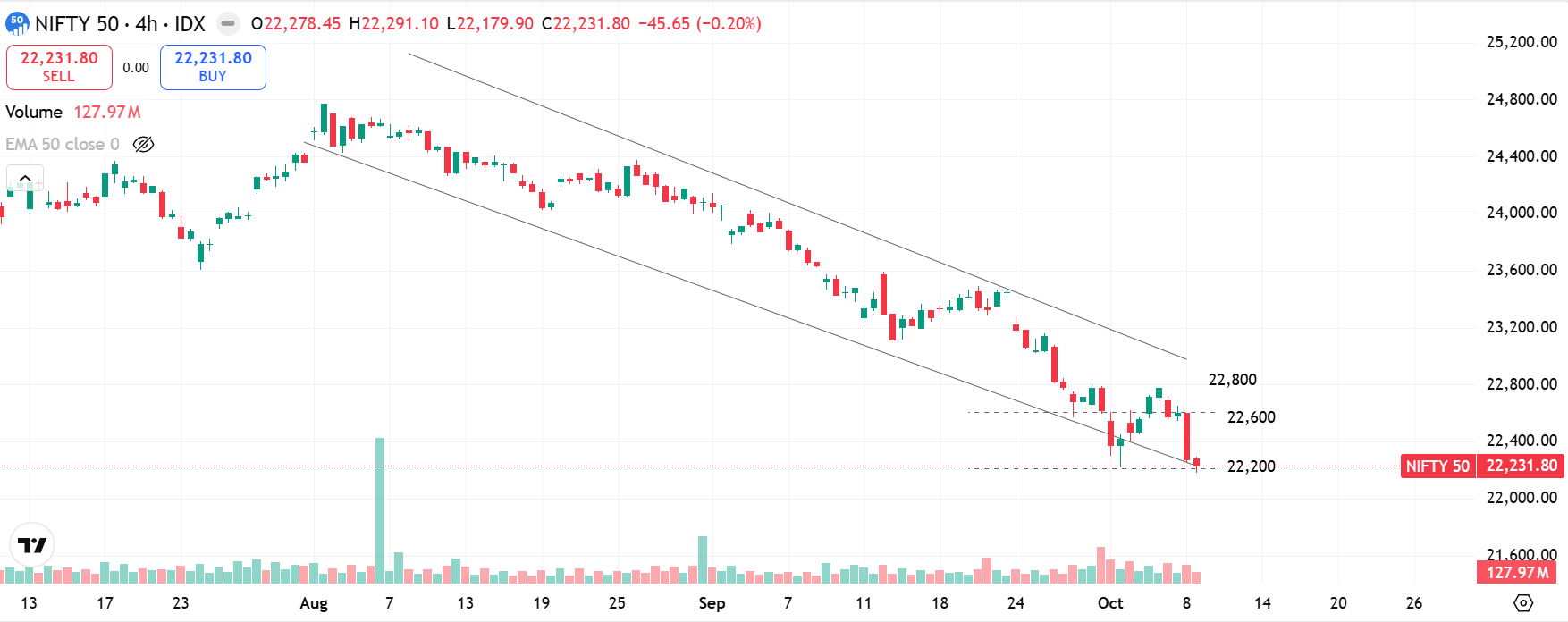
Nifty: 22,231.80, -1.64%
Sensex: 71,593.54, -1.44%
Bank Nifty: 54,515.05, -0.98%
Global Market Movements
GIFT Nifty: GIFT Nifty futures is trading at 22,364, indicating a muted start for the Indian indices.
US Markets: U.S. Stock Markets closed mixed on Thursday, October 8, 2026 with Nasdaq getting the biggest hit of -1.25% as major tech stocks declined.
Asian Markets: Asian markets traded mix to lower today, as the losses on Wall street pressured major tech stocks.
Commodities
Brent crude: $103.4/barrel
Oil remains beyond $100/barrel as Middle East supply concerns persist.
FII & DII Acitivity
FII: -12,944 crores
DII: +10,703 crores
Net Flow: -2241 crores
The Investors Lens
How to assess the Hospital industry?
A hospital can be full, busy and treating hundreds of patients yet still struggle to make a profit. Why?
Running a hospital is a capital-intensive business. Buildings, medical equipment, doctors and staff create substantial costs, even when some beds remain empty.
Here’s what to look at when assessing a hospital company:
-
Occupancy Rate: How many beds are actually being used? Low occupancy can mean expensive infrastructure is going underutilised.
-
ARPOB: How much revenue does each occupied bed generate daily? This helps compare pricing and treatment mix across hospitals.
-
EBITDA Margin: Is higher revenue translating into better operating profits?
-
New Bed Capacity: Is the company expanding into areas with enough demand, or adding beds that may remain empty?
-
ROCE: Is the hospital earning enough from the massive capital invested in buildings and equipment?
One warning sign: A hospital may report strong revenue growth simply by adding beds. But if those beds take years to fill, capital is tied up while costs keep accumulating.
The takeaway: In the hospital business, growth isn’t just about treating more patients. It’s about keeping capacity utilised, generating healthy profits per bed and earning good returns on expensive infrastructure.