What could happen today?
Indian equity markets are expected to remain cautious as a rebound in crude oil prices and renewed global tensions after Donald Trump’s rejection of Iran proposal weigh on overall sentiment.
Nifty 50 remains under significant technical pressure after the sharp decline in the last session, with the broader structure staying decisively weak. On the upside, 23,300 is likely to act as the immediate resistance zone.
On the downside, 23,000 stays the key psychological support to watch. A decisive breakdown below this level would likely accelerate selling and open the door toward 22,900–22,800 zone
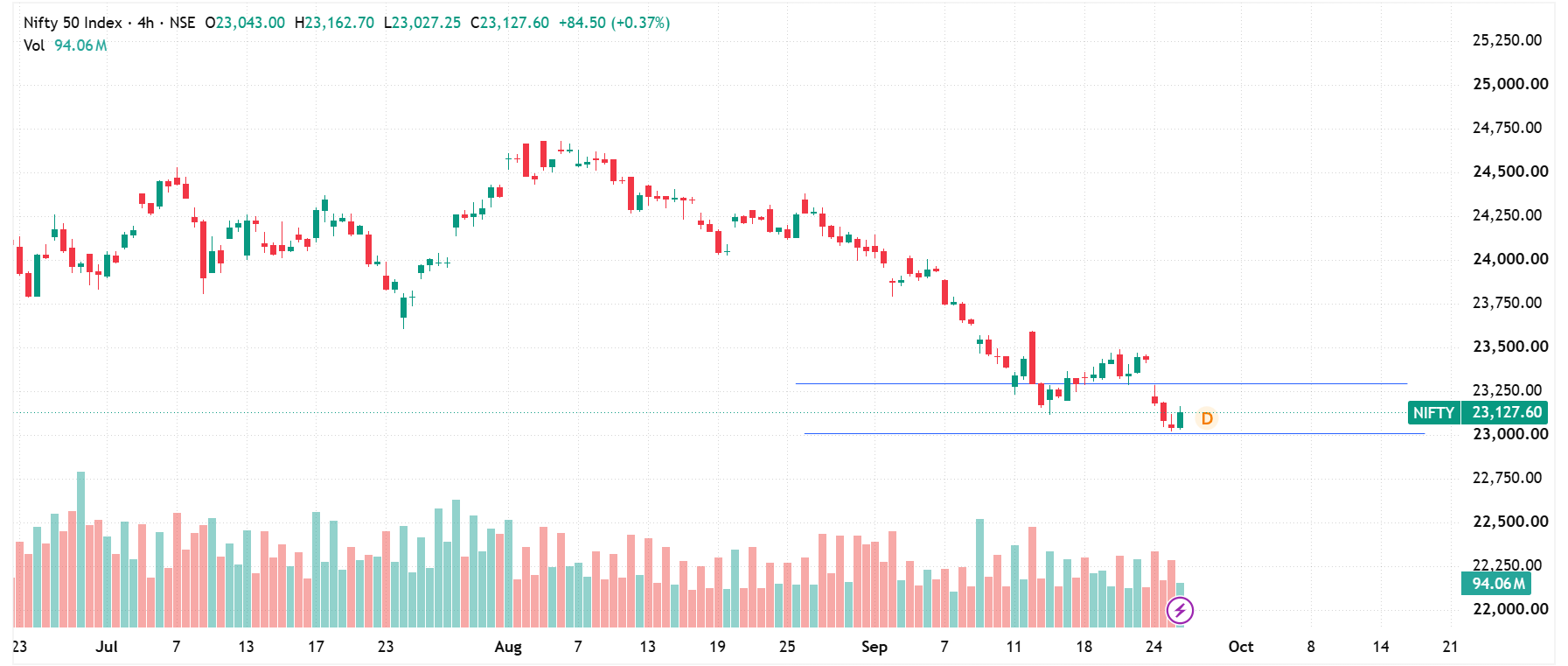
Nifty: 23,140.50, -0.88%
Sensex: 73,895.74, -0.54%
Bank Nifty: 55,540.40, -1.38%
Global Market Movements
GIFT Nifty: GIFT Nifty futures is trading at 23,135, signaling a flat to bearish sentiment for the domestic market today.
US Markets: U.S. stock market closed higher on Friday, September 25 with Nasdaq closing at +0.4%, S&P 500 closing at +0.5%.
Asian Markets: Asian stock markets traded on a mixed note as investors weighed rising oil prices and ongoing global tensions.
Commodities
Brent crude: $106.5/barrel
Crude prices rise again after Trump rejects Iran Peace proposal.
FII & DII Acitivity
FII: -3694 crores
DII: +2838 crores
Net Flow: -856 crores
The Investors Lens
Why Does Gold Rise When Uncertainty Increases?
When markets get nervous, investors often turn to gold. But why does a metal become a preferred asset when uncertainty rises?
Gold is viewed as a store of value and carries no direct credit risk from a company or government.
During periods of geopolitical tension, inflation concerns or financial stress, investors may reduce exposure to riskier assets and increase allocations to gold.
Gold can also benefit when real interest rates fall, because the opportunity cost of holding an asset that doesn’t pay interest becomes lower.
Central banks have also been increasing their gold holdings in recent years, adding another source of demand.
In simple terms: When confidence in riskier assets falls, gold can become a way to preserve value and diversify risk.