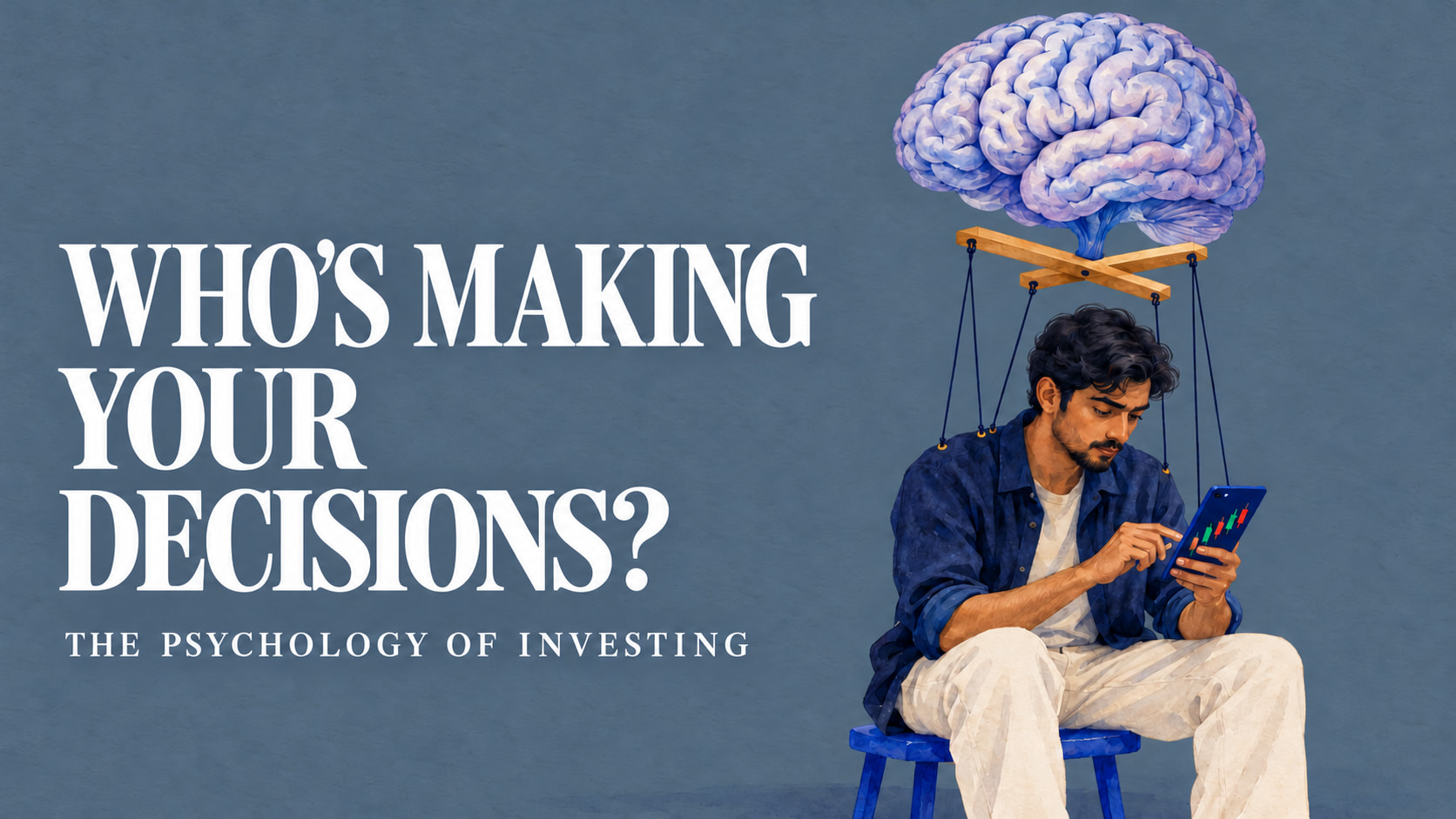
How do you make your investment decisions? Do you do your own research? Read research done by others? Follow a stock tip you received from a friend? Or maybe you see someone discussing a stock with confidence and believe they must have done their research.
Are you really making Your Own Investment Decisions?
Today, we have more information available to us than ever before, everything is just a few clicks away. Then, with so much of information available around us, making better investment decisions should be easier, right? But it isn’t. Because there is one thing that comes between the information we receive and the decision we finally make, “us”.
We may know not to panic when markets falls, we may know that we shouldn’t blindly follow the crowd, we may know that past performance doesn’t guarantee what happens next. Yet, when the situation comes, we often do the opposite.
Because making decisions is not just about how much information we have. It’s also about “how our mind reacts to it”.
And that’s where psychological biases come in. A psychological bias is “a natural tendency of our mind to think, judge or make decisions in a certain way, often without us even realising it.”
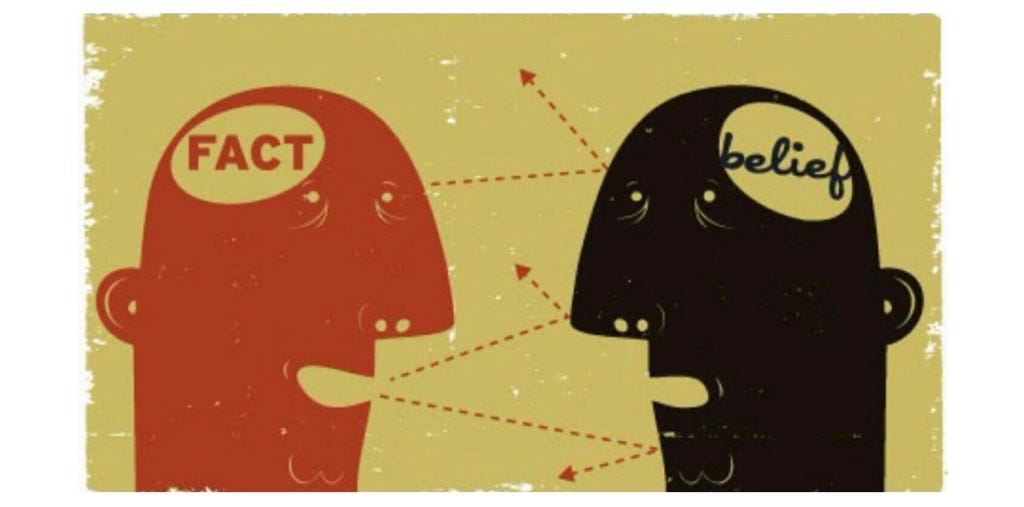
Most of us go through these biases almost everyday, without knowing it affects our decisions. Some of the most frequently faced biases are:
1. Loss Aversion: “Why losing hurts more than winning feels good.”
Let’s say you buy a stock and a year after it is trading at half the value. Going ahead, the future of the company do not seem to be very bright either but what are the chances that you sell it and book the loss? Very less right? Most of us have been in this position and believe that we will hold it until the price appreciates again or we may even buy more on the pretext of averaging the cost.
This is due to Loss Aversion. The pain of a loss is two times more than an equal amount of pleasure. It means losing ₹100 feels twice as bad as winning ₹100 feels good.
2. Sunk Cost Fallacy: I’ve already invested so much; I can’t walk away now.”
Imagine you bought a stock at ₹1,000. It falls to ₹700, and your original reason for buying it is no longer valid. Maybe the company’s growth outlook has deteriorated. But instead of selling, you think that “I’ve already put ₹1 lakh into this. I can’t sell now and accept the loss.”
So, you continue holding it, hoping it comes back to ₹1,000. That’s the sunk cost fallacy. It applies broadly to all human behavior and its like “staying in a bad relationship because you have already spent so much of your time.”
You are allowing the money you’ve already spent and cannot recover to influence what you should do next.
3. Herding Behaviour: “Everyone else is doing it, so maybe I should too.”
This is probably one of the most common ones. We often let other people’s opinions or decisions influence our own. We buy a stock just because a famous person on the internet told us about it.
Why? Because following the crowd feels comfortable. Standing out and having an opinion of your own takes courage. When everyone around us is doing the same thing, it becomes easier to believe that they must know something we don’t. And this is where herding behaviour can become dangerous. The crowd can sometimes be right. But the crowd can also be wrong.
Herding behaviour isn’t limited to buying stocks either. It can make us sell during a panic, avoid an investment because everyone is pessimistic, or enter an asset simply because everyone seems to be making money from it.
4. Confirmation Bias: “We hear what we want to hear.”
When you decide you want to buy a red car, suddenly every car you see on the road seems to be red. In investing, once you like a stock, your brain acts like a selective filter, only noticing positive news while tuning out red flags. We naturally look for things that confirm what we already believe. Think about it outside investing. We often feel more comfortable around people who agree with us. But when someone disagrees, we immediately start looking for reasons why they might be wrong.
The same happens with stocks. We give more importance to information that supports our beliefs and often ignore what challenges them. The information may be the same, but our mind decides what we want to see.
Final Thoughts: From Emotional Trader to Systematic Investor
Overcoming psychological biases is not about training your mind into becoming an emotionless machine, that is nearly impossible. It’s about designing a process that prevents bad decisions in the first place.
This is why institutional funds and modern investors rely heavily on Algorithmic Strategies.
Nobel laureate Daniel Kahneman famously split human thinking into two modes:
“System 1: fast, emotional, instinctual and System 2: slow, logical, analytical.”
When markets get volatile, our fast, emotional brain takes control causing us to buy at the top out of greed and sell at the bottom out of fear.
When algorithms invest for you, algorithms don’t feel pain when taking a loss (overcoming Loss Aversion), they don’t care how much money was spent yesterday (ignoring Sunk Costs), and they don’t read Twitter trends (immune to Herding).
Question for you: Looking back at your own investing journey, which psychological bias do you catch yourself falling for the most, and what rules do you use to stop it?