The last few sessions of September ended on a recovery mood for the markets as the sentiment improves. Nifty closed more than -6% lower in September. Indian equities might show some signs of recovery but still remains cautious, as crude price eases and trades below $100/barrel.
Nifty showed positive signs in the first half of the trading session yesterday, which was followed by sell-off in the second half.
On the upside, 23,000 is likely to act as the key psychological resistance zone. On the downside, 22,500 stays the broader support level to watch. A decisive breakdown below this level would likely accelerate selling and open the door toward 22,000 zone.
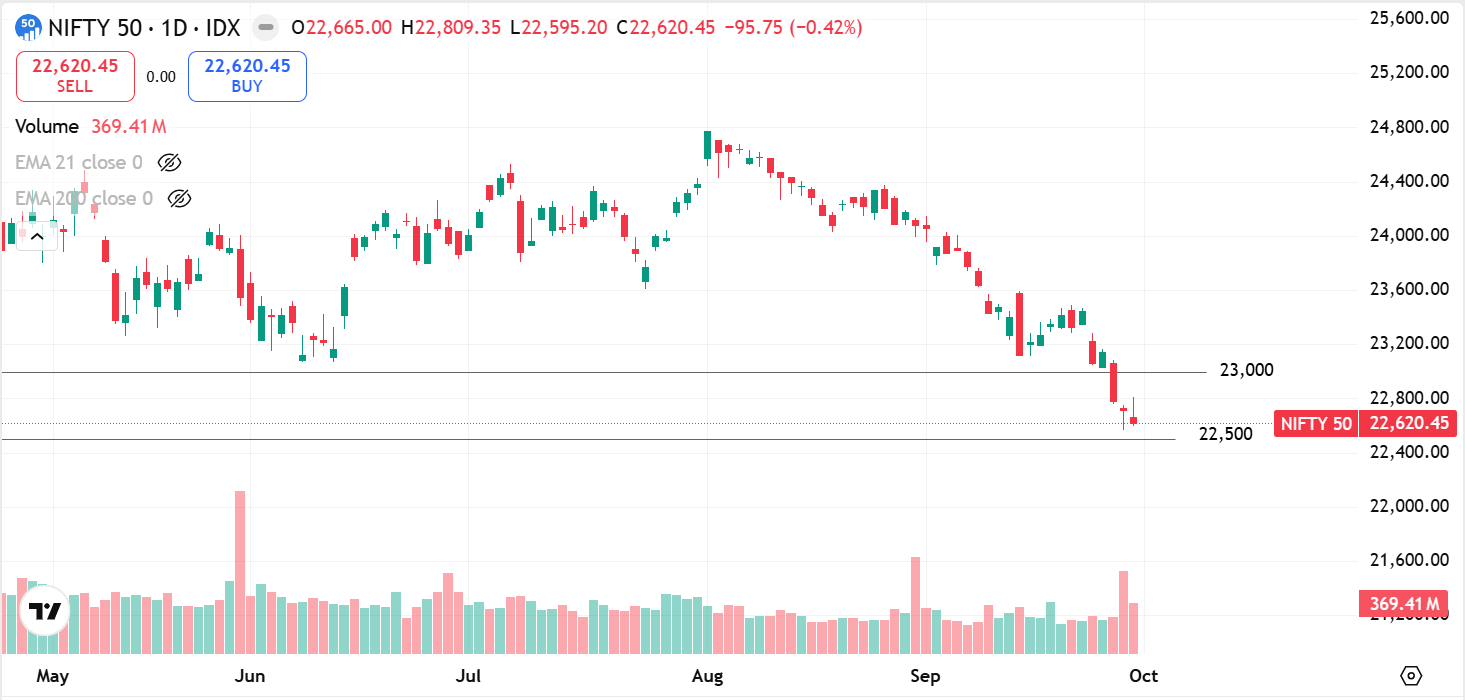
Nifty: 22,620, -0.42%
Sensex: 72,480, -0.07%
Bank Nifty: 54,633, +0.69%
Global Market Movements
GIFT Nifty: GIFT Nifty futures is trading live at 22,601, signaling a flat start for the domestic market today.
US Markets: U.S. stock indexes closed on a mixed note on Wednesday, September 30th, with Nasdaq closing +0.24% up, S&P 500 closing -0.25% down.
Asian Markets: Asian stock markets traded on a mixed note with Japan’s index Nikkei 225 closing +2.40% up, outperforming regional peers.
Commodities
Brent crude: $97.7/barrel
Brent crude Oil price eases and is trading at under $100/barrel, on signs of Middle East exports recovering.
FII & DII Activity
FII: -10,148 crores
DII: +11,271 crores
Net Flow: +1,123 crores
The Investors Lens
Why Does Management Guidance Matter?
A company can report strong results and still see its stock fall. One reason? Management guidance.
Earnings tell us what has already happened. Guidance tells us what management expects to happen next, whether in revenue, margins, profits, demand, capex or other key business metrics.
For example, imagine a company reports 20% profit growth, but management expects growth to slow to 10% next year or see less demand for the product due to regulatory or any reasons. The results may look strong, but investors may start lowering their expectations for future earnings.
The opposite can also happen. A modest quarter followed by strong guidance can signal improving demand or business momentum, leading investors to reassess the company’s future earnings potential.
That is why, during an earnings season, it is important to look beyond the headline numbers and listen to what management says about the road ahead.
But guidance is still a forecast, not a guarantee. It should be evaluated alongside the company’s track record, industry conditions and broader economic environment.
The takeaway: Results tell you where the company has been. Guidance tells you where management thinks it is going. And in the stock market, expectations about the road ahead can matter more than yesterday’s numbers.