
What could happen today?
Indian markets are likely to stay cautious with a mixed to cautious global sentiment as the US markets closed lower yesterday and the Asian indices traded on a mixed note today. The recovery, is likely to remain sensitive to shifts in the global macroeconomic and geopolitical environment.
On the upside, 23,000 is likely to act as the broader resistance zone after 22,800 being the next key resistance zone.
On the downside, 22,600-22,550 acts as the support level while 22,200 remains the broader support zone.
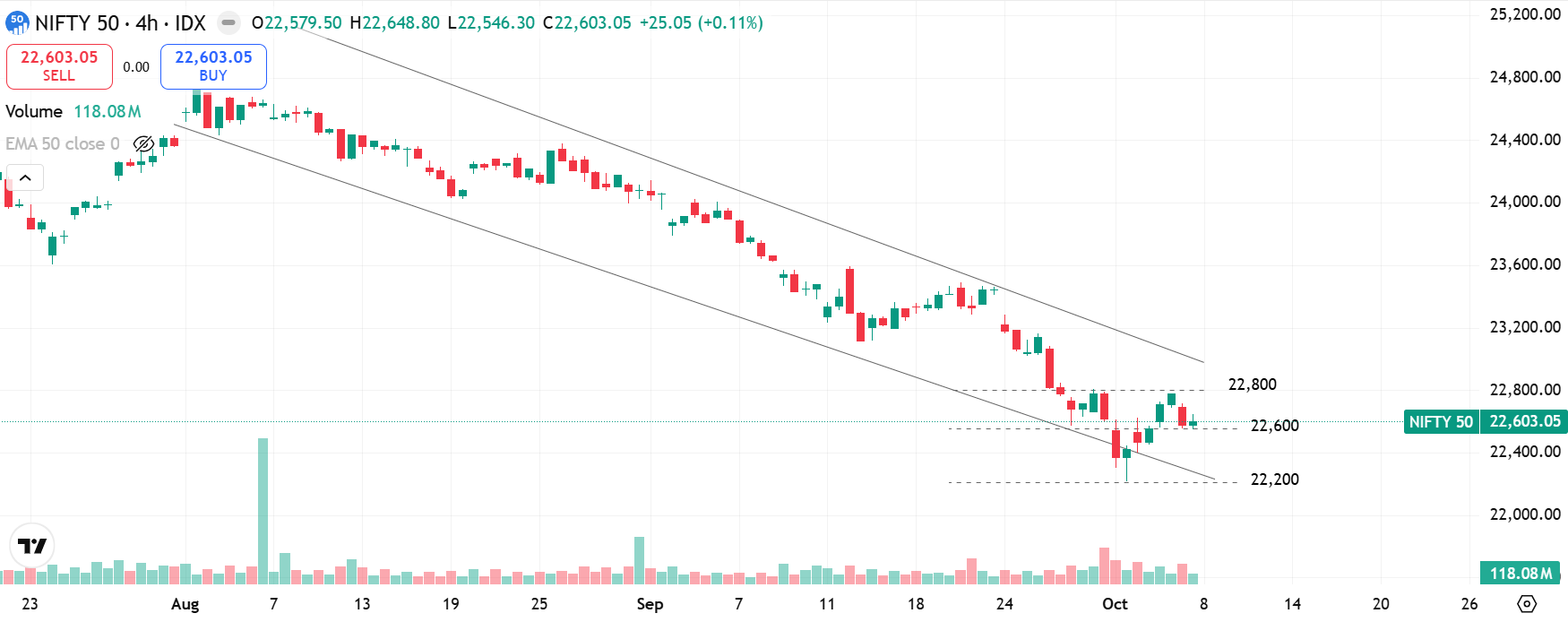
Nifty: 22,603.5, -0.76%
Sensex: 72,638.70, -0.59%
Bank Nifty: 55,055.55, -0.13%
Global Market Movements
GIFT Nifty: GIFT Nifty futures is trading at 22,600, indicating a muted start for the Indian indices.
US Markets: US stock indices closed lower yesterday as the market experienced a slight pull back from the highs.
Asian Markets: Asian markets are showing mix performance today, with Hang Seng (Hong Kong) trading -0.62% lower, Shangai Composite (China) at +0.31% gains.
Commodities
Brent crude: $102.3/barrel
Oil remains beyond $100/barrel as Middle East supply concerns persist.
FII & DII Acitivity
FII: -6,121 crores
DII: +4,597 crores
Net Flow: -1524 crores
The Investors Lens
How does an Airline actually make money?
An airline can sell millions of tickets and still lose money. So where does the money actually come from and where does it go?
The biggest source of revenue is, of course, passenger tickets. But airlines also earn from baggage fees, seat selection, food, cargo, loyalty programmes and other ancillary services.
The challenge is that airlines have high fixed costs. Aircraft leases, employee costs, airport charges and maintenance have to be paid whether a flight is full or half empty.
That makes load factor extremely important, the percentage of available seats that are actually filled. A fuller aircraft spreads many of the same costs across more passengers.
Then comes one of the biggest variable costs: aviation turbine fuel (ATF). Fuel prices can significantly affect an airline’s margins. A rise in fuel costs can quickly eat into profits if ticket prices cannot be increased.
So an airline’s profitability depends on a simple equation:
Revenue per passenger + ancillary revenue − operating costs = profitability
And this is why airlines often operate on thin margins despite generating huge revenues.
The takeaway:
Airlines don’t make money simply by filling planes. They make money when the revenue earned per seat is higher than the cost of operating that seat making ticket prices, load factor and fuel costs critical to the business.