
What could happen today?
Indian equities are likely to remain volatile and cautious as elevated crude oil prices, and escalating geopolitical tensions weigh on investor sentiment.
On a technical basis, Nifty remains under pressure after another bearish candle on Monday. On the downside, 22,300 remains the immediate support level, followed by 22,200. On the upside, 22,400-22,500 remains the immediate resistance zone, followed by the 22,600 level.
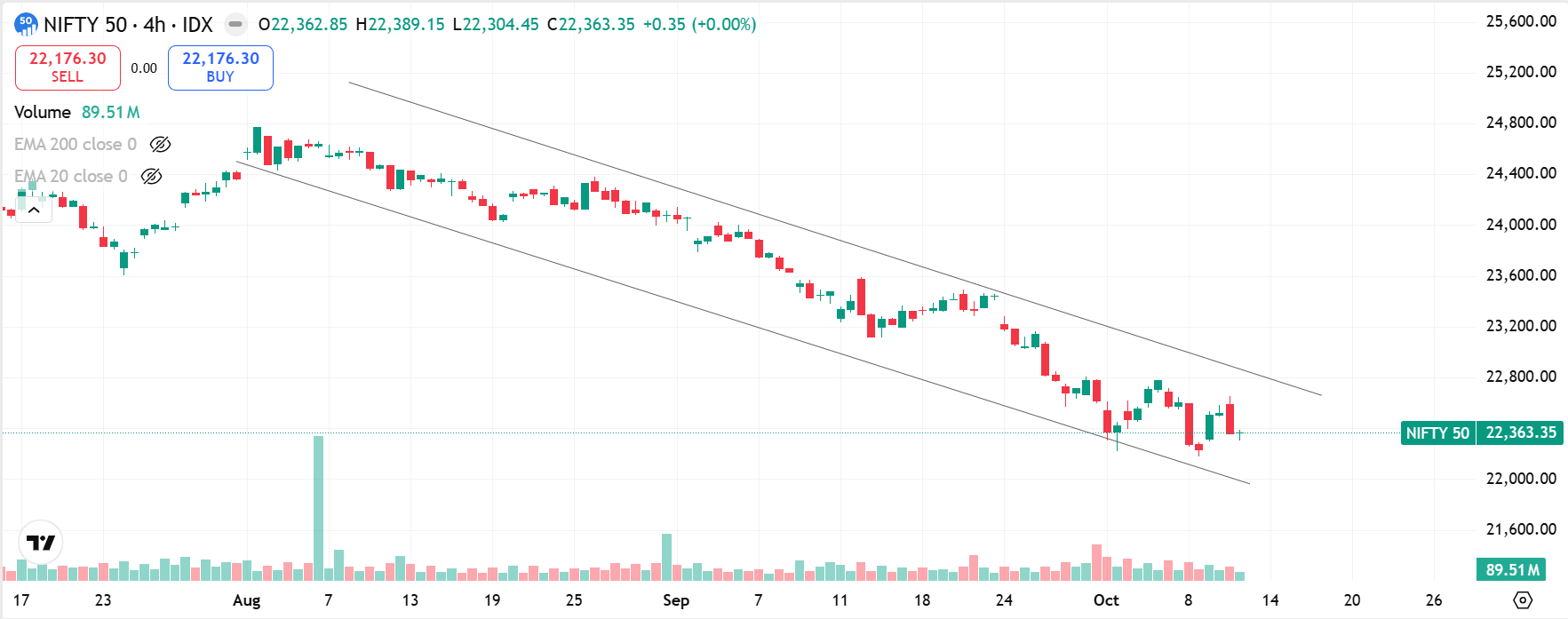
Nifty: 22,363.35, -0.70%
Sensex: 71,924.68, -0.76%
Bank Nifty: 54,918, -0.61%
Global Market Movements
GIFT Nifty: GIFT Nifty futures is trading at 22,436.50, a +0.07% up, indicating a muted start for the Indian indices.
US Markets: The U.S. stock market closed mixed on its last active trading session, with the Dow Jones edging slightly higher while the Nasdaq and S&P 500 dipped.
Asian Markets: Asian stock markets are trading mixed to lower today, pressured by a tech and chip sector as well as tracking overnight losses on Wall Street.
Commodities
Brent crude: $105.1/barrel
Brent crude holds above $105/barrel mark after the attack on Saudi Arabia airport, escalating the situation.
FII & DII Acitivity
FII: -1,708 crores
DII: +3.405 crores
Net Flow: +1,697 crores
The Investors Lens
What Is Working Capital, and Why Does It Matter?
A company reports strong profits, yet struggles to pay its bills. How is that possible? The answer could be working capital.
Working capital is the money a business needs to manage its day-to-day operations.
Working Capital = Current Assets − Current Liabilities
Current assets include cash, inventory and money customers owe the company. Current liabilities include payments due to suppliers, short-term debt and other near-term obligations.
For example, if a company has ₹100 crore in current assets and ₹70 crore in current liabilities, its working capital is ₹30 crore.
Why does this matter? A company may report profits on paper, but if customers delay payments or inventory piles up, cash can get trapped in the business. It may struggle to pay suppliers, employees or other expenses on time.
This becomes especially important for businesses facing rising raw-material costs or slowing demand, as they may need more cash to keep operations running.
The takeaway: Profits tell you whether a business is earning money. Working capital helps you understand whether it can keep operating smoothly while waiting for that money to arrive. A profitable business still needs cash to survive.