
Indian equity markets are likely to open on a cautious note and remain under pressure, as high crude oil prices and escalating geopolitical tensions weigh on investor sentiment. WTI crude is trading near $98 a barrel, while Brent has moved above $110, keeping risks in focus. The sustained energy-price pressures could shake hopes of a steady recovery in domestic markets.
On the upside, 23,000 remains a crucial resistance zone. A steady move and closing above the level could improve the technical structure in the short term. On the downside, 22,600 followed by 22,500 remains a crucial support zone.
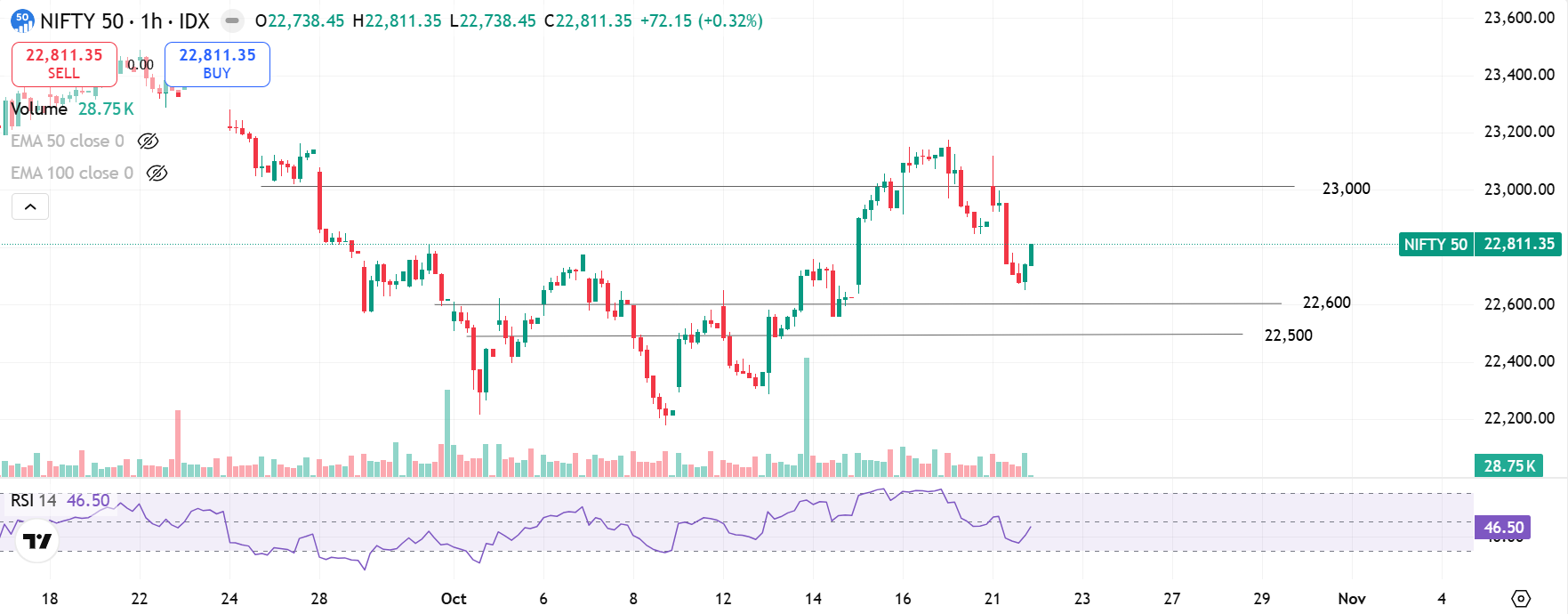
Nifty: 22,811.35, -0.34%
Sensex: 73,709.69, -0.19%
Bank Nifty: 54,976.90, -0.92%
Global Market Movements
GIFT Nifty: GIFT Nifty is currently trading at 22,631, down ~-180 points from Nifty’s previous close, pointing towards a negative sentiment for the domestic market.
US Markets: U.S. stock markets closed higher on Wednesday, October 21, with DJI closing ~+0.68% up and S&P 500 closing ~+0.60% up.
Asian Markets: Asian markets are trading mostly lower today as investors weigh mixed US tech earnings, AI-related valuation concerns, and rising oil prices driven by Gulf and Middle East tension.
Commodities
Brent crude: $110.7/barrel
Crude oil crosses $110 mark again amid Middle East supply concerns.
FII & DII Acitivity
FII: +1,022 crores
DII: +1,614 crores
Net Flow: +2,636 crores
The Investors Lens
Can a company increase its price without lossing its customers?
When costs rise, most businesses face a choice: absorb the hit to profits or pass it on to customers. But what if raising prices actually makes a company stronger?
A price hike can benefit a company when it increases revenue faster than costs rise, helping protect or even improve profit margins. But the outcome depends on whether customers are willing to pay more without significantly reducing their purchases.
Consider a company selling 1,000 units at ₹100 each, with a cost of ₹70 per unit. Its profit is ₹30,000. If it raises the price to ₹110 and sales remain unchanged, profit rises to ₹40,000 a 33% increase in profit from a 10% price hike, assuming costs remain constant.
But not every company has this flexibility. The key factors to examine are:
Pricing Power: Can the company raise prices without losing customers to competitors?
Demand Sensitivity: Will customers continue buying, or switch to cheaper alternatives?
Cost Inflation: Are higher prices enough to offset rising raw material, fuel and labour costs?
Volume Growth: Are sales volumes holding up after the increase, or are customers buying less?
Margins: Is the company actually retaining more profit after accounting for higher costs?
This becomes particularly important when crude oil prices rise. Paint, tyre, aviation and logistics companies may face higher input costs, but their ability to pass those costs on varies significantly.
The takeaway: A price hike is not automatically good news. The strongest companies are often those that can charge more without driving customers away and protect their margins even when costs rise.