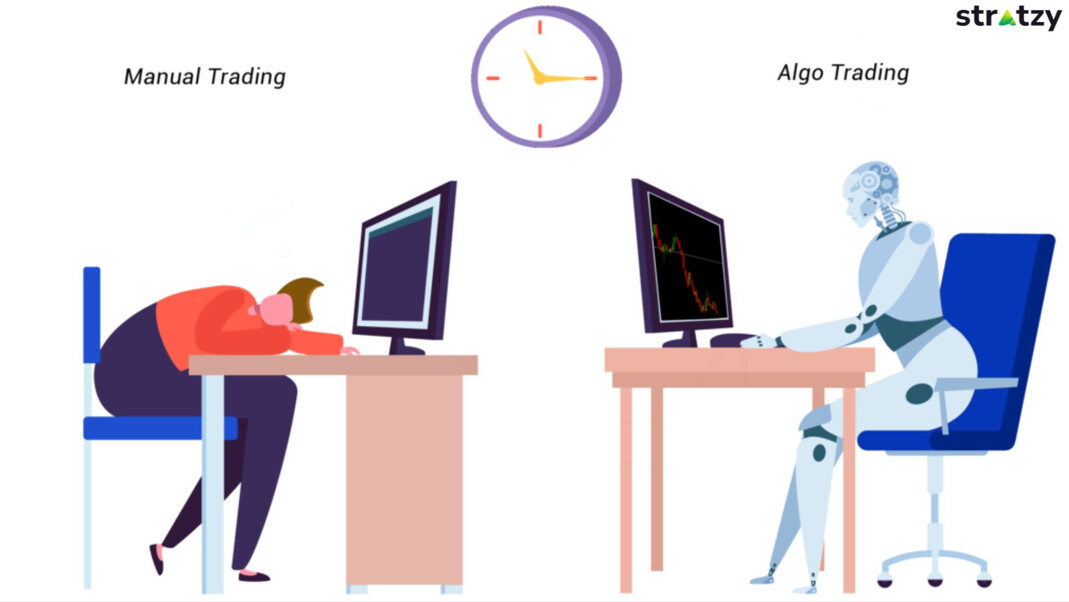
Recently, I’ve been getting a chance to discuss trading and automation with many active traders — people who have been in the markets for years, who understand volatility, who read price action well, and who are confident in their manual trading abilities.
One very interesting thought kept coming up again and again:
“I still don’t understand why people hand over trading to algos.
I’ve built my understanding over years.
I read markets. I understand volatility.
Why would I let a system trade my money?
When I trade manually, I’m in control.”
And honestly — that’s a fair point.
Manual traders who survive long enough develop real skill. Screen time teaches things no book can.
But during the discussion, I asked a simple question:
When you take a short straddle and the market suddenly spikes…
are you reacting calmly… or instantly?
Most traders smiled.
Because the truth is — we react.
Experience makes reactions faster, but it’s still a reaction.
Now imagine that reaction is already predefined.
Entry rules decided.
Exit rules decided.
Hedges planned.
Risk capped.
Position sizing fixed.
Before emotion even enters.
That’s where automation changes the conversation.
Automation doesn’t replace skill.
It protects capital from mood.
Manual trading works beautifully when:
• You’re fresh • You’re focused • You’re watching the screen
But markets don’t move only when we’re ready.
They move when we’re distracted too.
And with serious capital, even a small emotional deviation — 2–3% — becomes expensive.
Another concern traders shared was:
“I trust myself more than code.”
And they should.
Because the real question isn’t trust.
It’s consistency.
Options strategies like credit spreads or strangles are not about predicting direction every day.
They’re about executing probability over hundreds of trades.
If a strategy has an edge, inconsistency is the biggest risk — not the market.
That’s exactly where Stratzy changes the game.
The idea isn’t: “Let the machine gamble.”
The idea is:
• Define maximum drawdown. • Allocate capital properly. • Automate risk management. • Remove impulsive deviation. • Manual trading gives satisfaction. • Automation builds structure.
And when wealth starts scaling…
structure almost always beats instinct.
Just something worth thinking about.