The RBI Governor is mid-sentence on monetary policy — one of the most consequential statements for Indian markets — and the comment section looked like this: *Ce. Pe. Put. Call. Puy. Fall coming. Go for Ce. Reversal from low.
*
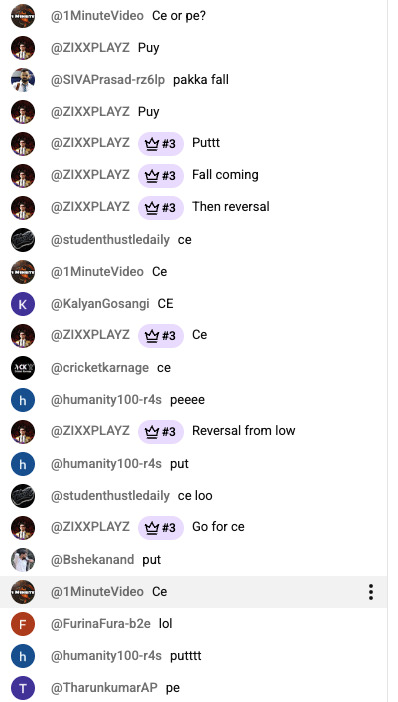
Not a single person in that chat was analysing what the Governor said. No one was tracking the rate decision, the stance change, the forward guidance. Everyone was gambling on the next 15-minute candle.
And the painful part? This isn’t a fringe behaviour. This is mainstream retail trading in India in 2026.
The real problem isn’t information. It’s the gap between knowing and doing.
Ask any of those traders in that chat — do you know that naked options buying has a sub-30% win rate? Most will say yes. Do you know that credit spreads give you structurally better odds? Most will say yes. Do you know that systematic trading outperforms gut-feel trading over time? Yes.
They know. And they still type “Ce” in the RBI chat.
Why does this happen?
1. The dopamine trap
Buying a call option and watching it move in real time is neurologically identical to gambling. The brain doesn’t distinguish between the two — it releases dopamine either way. A credit spread with defined risk and a 66% base win rate doesn’t give you that rush. Even if it makes more money over time, it feels boring. And humans are wired to choose excitement over logic.
2. The execution gap
Even traders who genuinely want to trade credit spreads hit a wall — you need to place multiple legs simultaneously, monitor multiple strikes, manage the spread if it moves against you, and exit both legs together. One mistake and your hedge becomes a naked position. It’s not that people don’t know — it’s that execution is genuinely hard manually. The friction of doing it right is so high that most just give up and buy a single option instead.
3. The mindset problem
Trading feels like a skill game where the next trade can make up for the last loss. This is the same psychology as a casino — one more hand, one more spin. The idea that a boring, systematic process running quietly in the background while you go about your day could outperform frantic screen-watching is genuinely hard to accept emotionally, even when the data says otherwise.
This is exactly why algos work — and why they’ll keep working
When everyone in the RBI chat is typing “Ce” or “Pe” — an algo is on the other side. It has already priced in the probability of a rate cut, set up a credit spread with defined risk, and will exit at a pre-set level regardless of what the next candle does. No panic. No FOMO. No dopamine.
The edge in algo trading exists because human behaviour is predictably irrational — and it will stay predictably irrational. Every “Ce” in that chat is the other side of a structured trade somewhere.
The gap isn’t knowledge. It’s not even intention. It’s infrastructure — having a system that removes you from the decision entirely. An algo doesn’t get excited when the RBI Governor speaks. It doesn’t check the chat. It executes the plan.
Were you watching the RBI policy today? What was your trade plan going in — and did you stick to it? Drop it below honestly 