If you looked at the charts around 3 PM yesterday, the move felt almost irrational. Nifty spent most of the session drifting lower before plunging sharply in the final 30 minutes, eventually closing down 359 points.
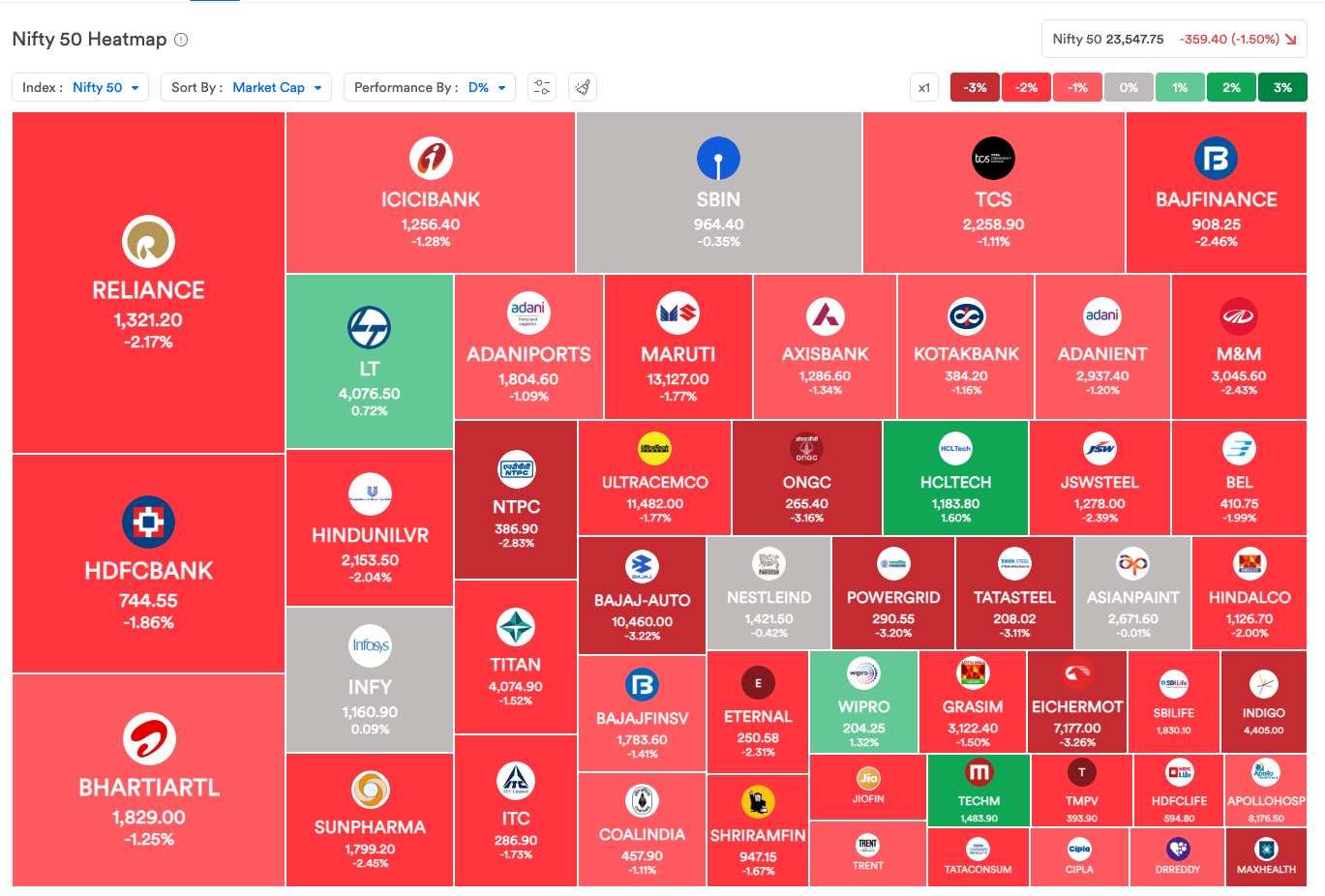
The key reason was **MSCI rebalancing**.
MSCI periodically updates its indices, forcing global index funds and ETFs to adjust their holdings.
Yesterday was the implementation day for those changes. While some stocks saw buying because they were added or received higher weightage, many large stocks faced selling pressure due to weight cuts. Since these funds typically execute trades near the market close, a flood of orders hit the market in the final minutes, leading to the sharp fall.
A dramatic closing candle that looked like panic but was largely driven by mechanics rather than a sudden change in fundamentals.
Of course, MSCI wasn’t the only factor. The market was already weak through the day amid concerns around the monsoon outlook and continued FII selling. The rebalancing flows simply amplified an existing downward trend.
What does this tell us about modern markets?
One important takeaway is that markets today are influenced not only by investors making discretionary decisions, but also by rules, benchmarks, and automated systems.
A growing share of market activity is driven by algorithms that react to predefined conditions rather than emotions. Some are designed to execute large institutional orders, some track indices, and others respond to liquidity, volatility, or price movements.
That doesn’t mean algorithms “caused” yesterday’s fall. The trigger was still the MSCI rebalance. But events like these highlight how much of today’s market activity is systematic. When large flows are expected on a known date, algorithms often handle the execution while human traders are left reacting to the price movement.
For retail investors, the lesson is simple: not every sharp move on a chart reflects a major change in business fundamentals. Don’t panic.